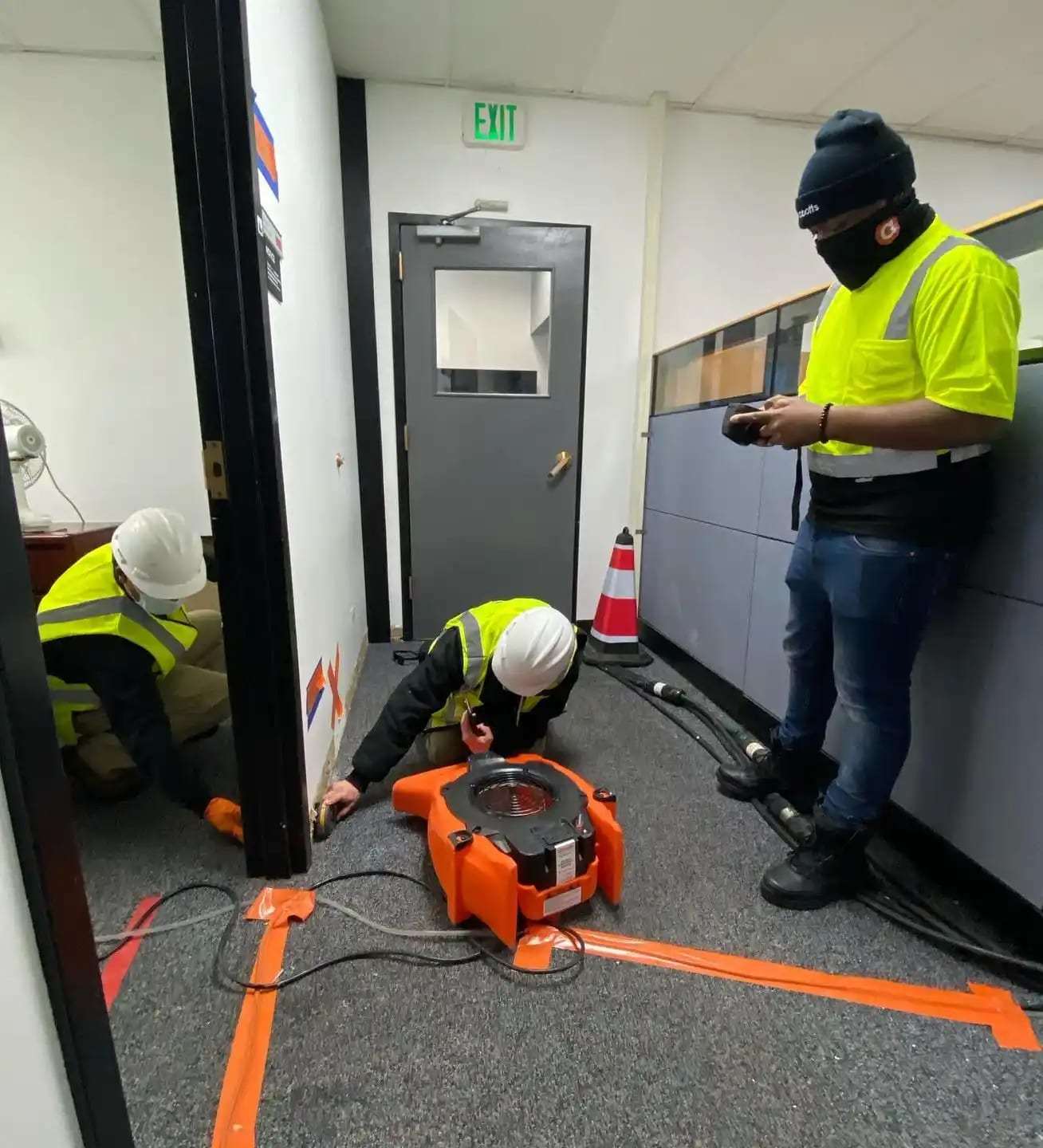
Workers in high-visibility vests setting floor drying equipment in an office. Shown to illustrate the work described; not a job for this site or at any address named here.
The Central Business District runs roughly between the 16th Street corridor and Broadway, with 17th Street long known as the city's financial and energy address. A large share of its towers were built during the energy boom of the 1970s and early 1980s, with others added before and since. Many have been renovated more than once, but original systems and materials can remain above ceilings, in mechanical rooms and in shafts.
In recent years, rising office vacancy and conversions of some buildings to residential or hotel use have added another layer. A tower may have floors that are vacant, under construction for a new use, and occupied by long-term tenants all at the same time. Each of those conditions changes the risk and the response when water gets loose.
What CBD towers commonly bring to a loss
- Factor
- Height
- Why it matters
- Water travels many floors; vertical access depends on freight elevators and stairs.
- Factor
- Original systems
- Why it matters
- Older risers, valves and sprinkler piping may be near the end of their service life.
- Factor
- Vacant floors
- Why it matters
- Leaks can go unnoticed; heat and inspection routines matter in cold weather.
- Factor
- Conversions in progress
- Why it matters
- Construction activity raises the chance of sprinkler damage and pipe strikes.
- Factor
- Building rules
- Why it matters
- Security escorts, insurance certificates and work-hour limits shape restoration schedules.
- Factor
- Street-level access
- Why it matters
- Loading docks on alleys and busy streets; right-of-way permits for containers.
- Factor
- Pre-1980s materials
- Why it matters
- Fireproofing, flooring and other materials may need testing before demolition.
Questions for CBD tower managers
- Which floors are vacant, and how often are they checked?
- Is there an up-to-date asbestos survey covering above-ceiling materials and fireproofing?
- Which tenants have critical operations, such as trading floors or data rooms, that need priority protection?
- If a conversion project is under way, how is its contractor coordinating with building engineering on sprinkler and water shutdowns?
- Is the freight elevator large enough for drying equipment and debris carts, and what is the reservation process during a loss?
Common questions
Do office-to-residential conversions change restoration planning?
Yes. During conversion, a tower may have temporary sprinkler and plumbing tie-ins, open shafts and construction crews on several floors. Agree in writing how the conversion contractor and building engineering will handle shutdowns and who responds if a temporary line fails.
How are trading floors or data rooms protected during drying elsewhere?
Ask the contractor to isolate air paths and monitor humidity near those rooms, and coordinate with the tenant's facilities staff before any shutdown.
General information for Downtown Denver, not a quote or professional advice. In an emergency, call 911.