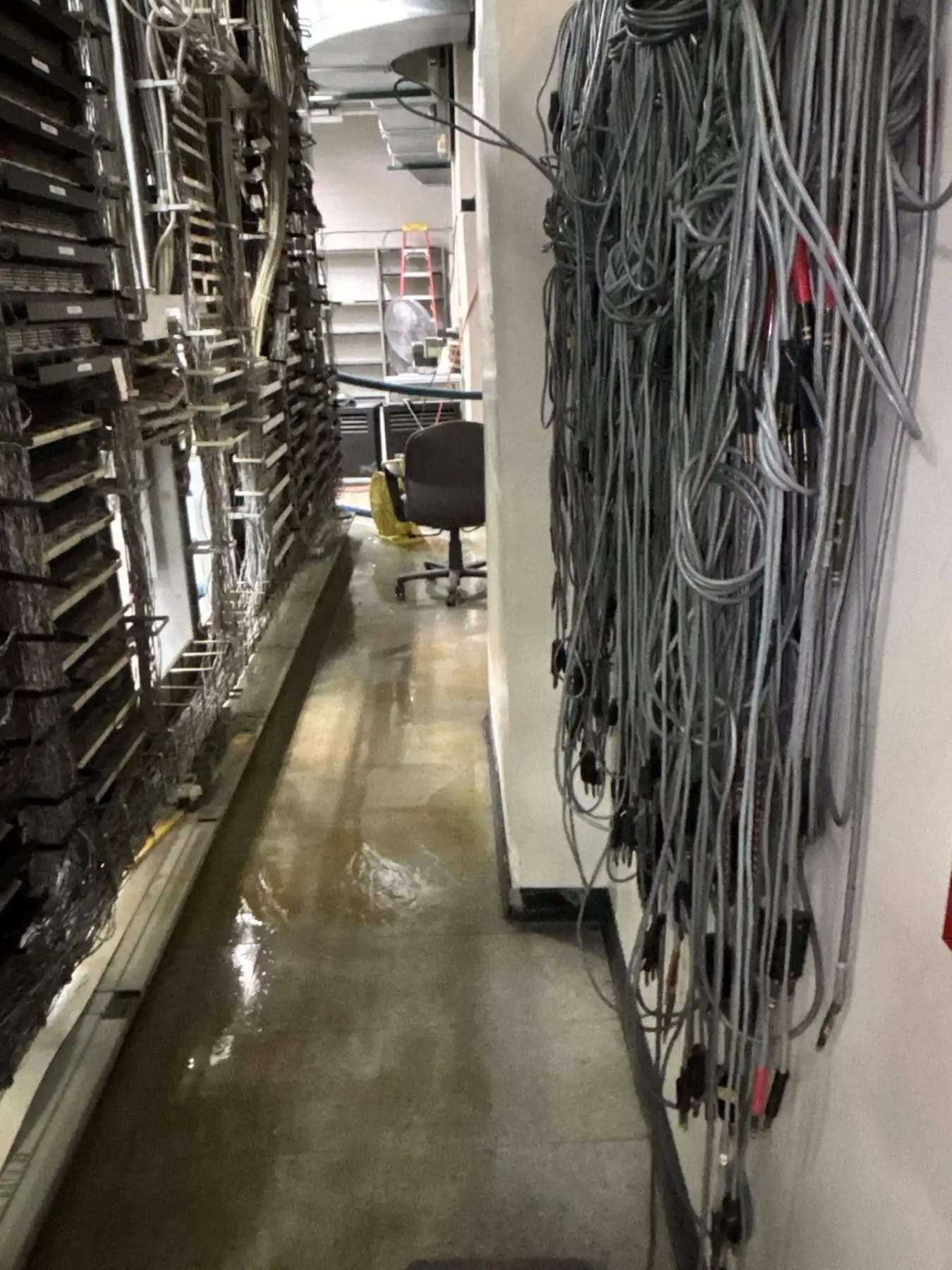
Bundled cables in a wet data room with water on the floor. A representative photo of the task, not a record of work at any particular property.
Where is the water?
The right call depends on what the water has touched.
- IfWater is on the floor but has not reached any equipmentThenStop the source, keep people out of the water, and have an electrician confirm it is safe before anyone extracts it.
- IfWater has dripped onto or into panels, bus duct or switchgearThenTreat the equipment as energized and hazardous. A qualified electrician decides whether and how to de-energize it. Plan for tenant power interruptions.
- IfUtility-owned transformers or service equipment are wetThenCall the utility. Building staff and contractors generally should not open or work on utility equipment.
- IfGenerator, fire pump or life-safety panels are involvedThenNotify your fire protection and life-safety vendors immediately, since loss of these systems may require interim protection measures.
- IfOnly low-voltage telecom or access-control gear is wetThenStill have it checked, then coordinate with the vendors who maintain it so security and communications are restored in order.
After the room is made safe
- Get a written assessment from the electrician listing which equipment was wetted.
- Ask whether wetted breakers, switches and other components should be replaced instead of dried. Many manufacturers and industry guides recommend replacing certain devices that have been submerged or soaked.
- Photograph nameplates of affected equipment for the insurer.
- Record which tenants or building systems lost power, and for how long.
- Keep the room dehumidified once it is safe, to slow corrosion on equipment that stays in service.
- Find and fix how the water got in: a riser above, a floor drain backup, or a foundation wall.
Why electrical water damage drives the schedule
In many commercial losses the drywall and carpet are the easy part. A wet main switchboard can leave a whole building on temporary power, and replacement electrical gear can have long lead times. That means the electrical assessment often sets the pace for reopening, more than how fast walls dry.
It also affects how drying equipment is powered. Large dehumidifiers and air movers draw significant current. If building circuits are compromised, the restoration contractor may need temporary power or a generator, which raises its own questions about placement, exhaust and noise in a dense downtown setting.
Plan for this before a loss: know where electrical rooms sit relative to risers, kitchens and roof drains, and keep current single-line drawings and the electrician's contact in the building binder.
General information for Downtown Denver, not a quote or professional advice. In an emergency, call 911.