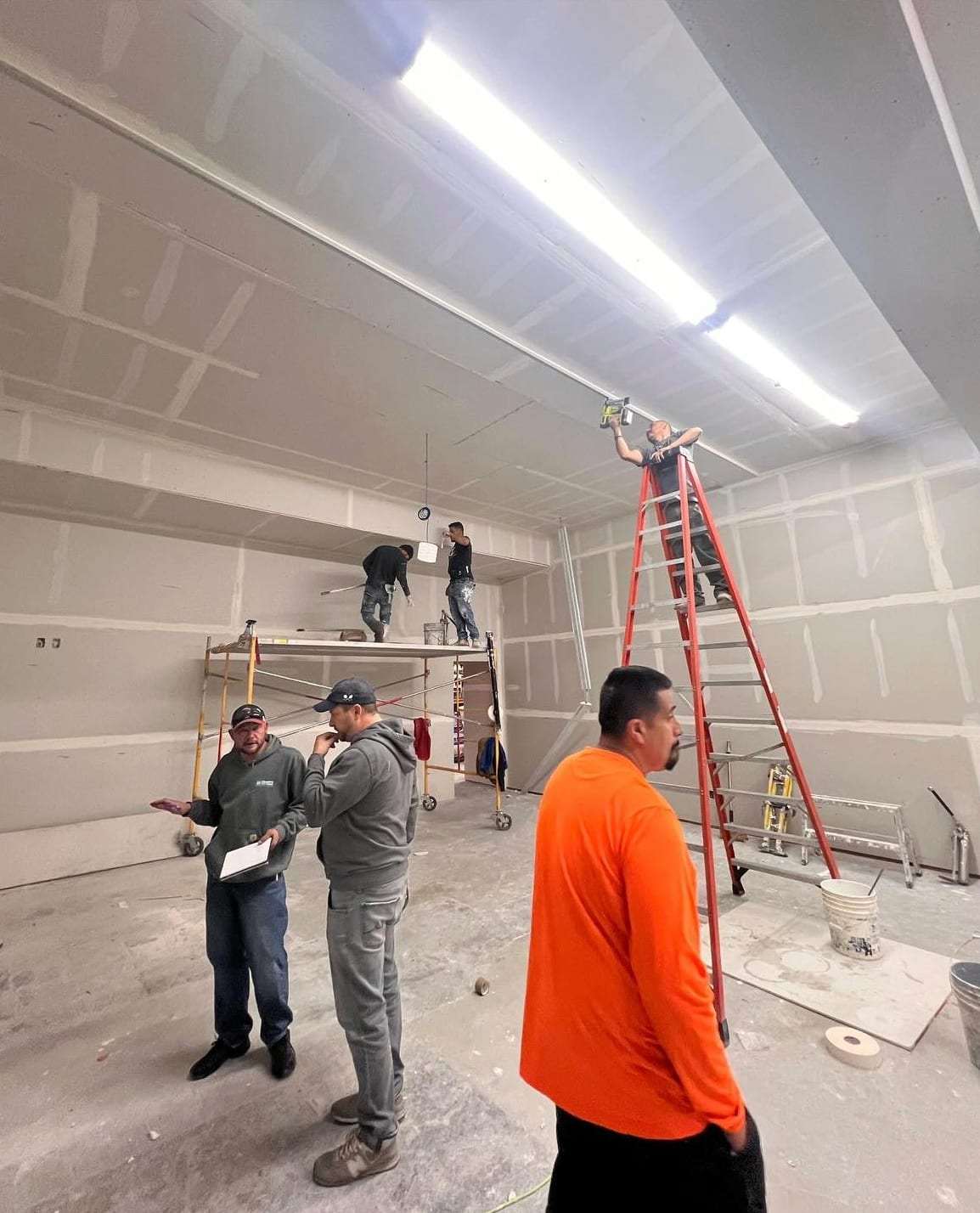
Crew working on drywall in an empty commercial unit. Illustrative only: this photo is not from a job tied to this site or a specific address.
Denver's air helps, but not automatically
Denver's outdoor air is often quite dry, which can make drying faster than in humid climates. But a closed office floor full of evaporating water quickly becomes humid inside, and outdoor air cannot help unless it is brought in and controlled. In winter, very cold outdoor air holds little moisture but has to be heated; in summer, afternoon storms can briefly raise humidity.
Large losses are usually dried with a combination of dehumidifiers, air movers and, where suitable, the building's air handling system. Some contractors use desiccant dehumidifiers or temporary heat for big spaces and dense materials. The right mix depends on the building, the season and what is wet. Ask why a particular setup was chosen and how it will be adjusted.
Planning numbers to ask about
- Affected area
- Square footage per floor, mapped by suite and common area.
- Materials
- Which are wet: carpet, gypsum, insulation, concrete, millwork.
- Equipment count
- How many dehumidifiers and air movers, and the basis for that count.
- Power draw
- Total electrical load and which circuits or temporary power will carry it.
- Monitoring
- Who takes readings, how often, and where the log is shared.
- Target
- The dry standard each material must reach before equipment comes out.
How a big floor is usually brought back
Extract thoroughly
Weighted or ride-on extractors pull water from carpet and pad far more efficiently than air movers can evaporate it.
Remove what will not dry
Saturated insulation, swollen base, and contaminated materials come out early so they do not keep releasing moisture.
Close the space
Isolate the drying zone so dehumidifiers are not trying to dry the whole building. Coordinate with engineering on HVAC zones.
Place equipment by need
Airflow aimed along wet walls and across floors, dehumidifiers sized to the space and the water load.
Read, adjust, repeat
Daily readings show which areas are lagging. Equipment is moved toward them and removed from areas that have reached target.
Verify and hand back
A final set of readings, shared with the owner and tenants, documents that each area is dry before rebuild.
General information for Downtown Denver, not a quote or professional advice. In an emergency, call 911.